
Teaching nursing in Hazara since 2013
A private college on Mansehra Road, registered with the nursing councils, affiliated with a tertiary care teaching hospital, and built around one idea: nurses learn nursing on a ward.
A college, a hospital, and the road between them
Abbottabad College of Nursing & Allied Health Sciences opened in 2013 as the first college of its kind in the Hazara Division. We teach fourteen programs across nursing, midwifery, pharmacy and the allied health technologies, from a two-year certificate to a five-year professional doctorate.
The College is small enough that faculty know students by name, and close enough to the Ayub Teaching Hospital complex that clinical placement is part of the week rather than a block at the end of the year.
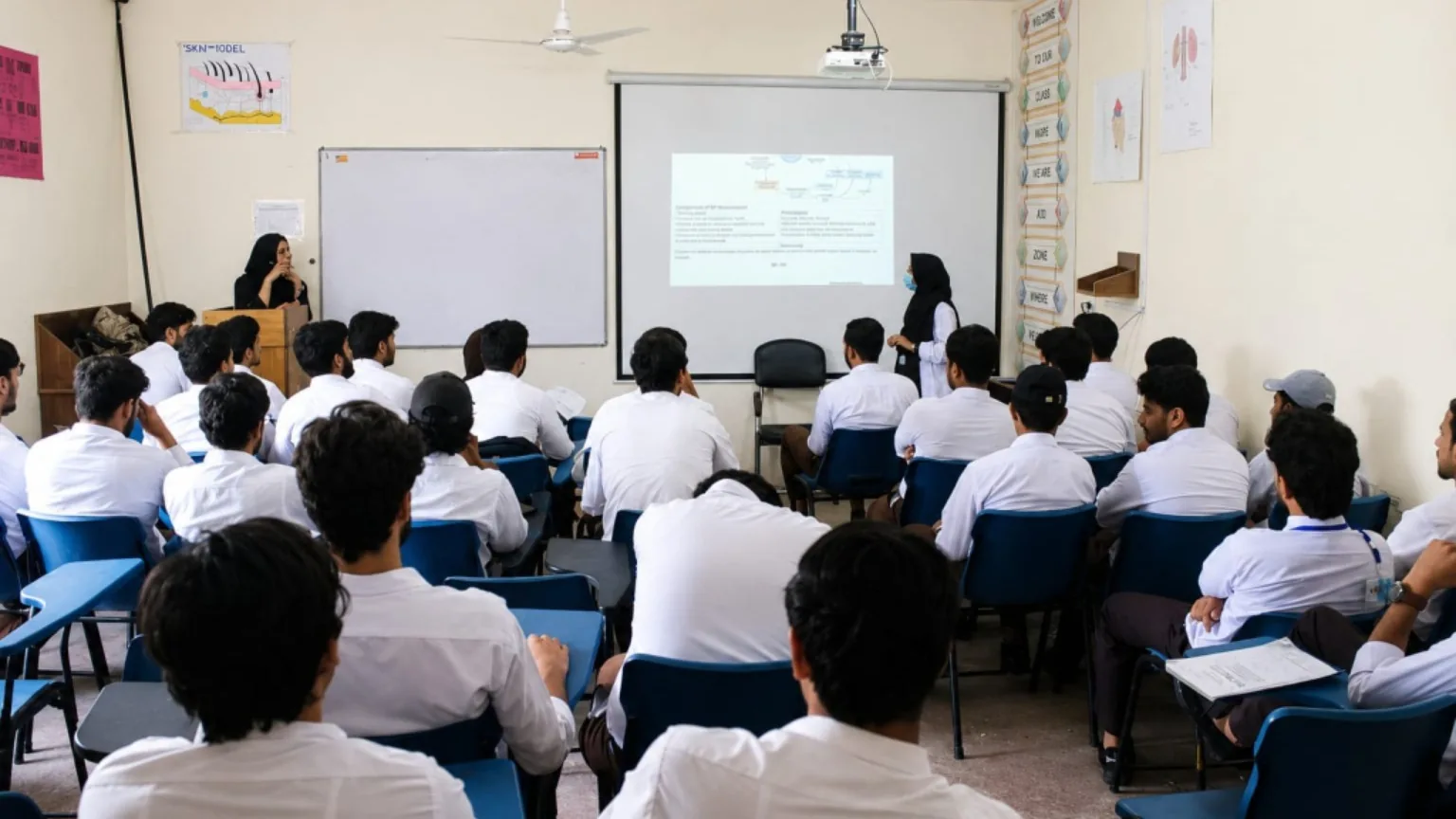 Est. 2013
Four things we will not compromise on
Safe practice before anything else
A student who is unsure asks. We would rather a rotation take longer than a patient be put at risk by someone pretending to know. Supervisors are told to expect questions and to answer them.
Teach what the councils examine
Curricula follow the PNC, NEB, KMU and FPAHS syllabi, because a graduate who cannot pass a council examination has been failed by the college, not by the paper.
Hours on the ward, not just in the room
Clinical placement is not an add-on. Every program carries supervised rotations, and attendance on the ward counts as much as attendance in the lecture theatre.
Open to whoever meets the criteria
Except where a program is restricted by regulation, admission is on marks and eligibility. Where CMW and LHV admit women only, that is the council’s rule, not ours.
How the College grew
Founded
Established as the first college for the nursing profession in the Hazara Division, opening on Mansehra Road with a small intake and a single nursing program.
Registration
Registered with the Pakistan Nursing Council and the Nursing Examination Board in Peshawar, and affiliated with Khyber Medical University, which allowed the College to enrol students for council-examined qualifications.
Degree programs
Added the four-year and five-year degrees, taking the College from certificate and diploma teaching into undergraduate education.
Allied health technologies
Introduced six allied health technology programs, registered with the Faculty of Paramedical & Allied Health Sciences, broadening the College beyond nursing into laboratory, imaging, theatre and dental practice.
Where our students learn and practise
A tertiary care teaching hospital for clinical placement, a reference library at the centre of the College, and a computer lab on fibre. These are the three facilities every program depends on.
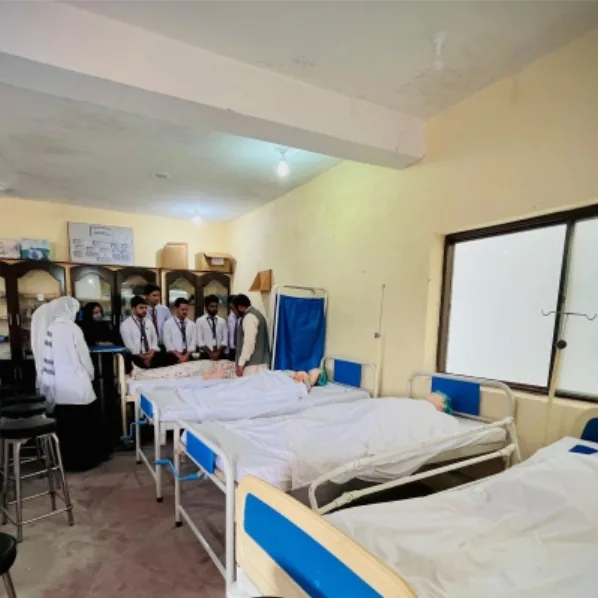 Clinical placement
Placement at the Ayub Teaching Hospital complex
The College is affiliated with the Ayub Teaching Hospital complex in Abbottabad, a tertiary care hospital, for clinical placement. Students are placed across the disciplines their program requires and work alongside practising clinicians rather than observing from a corridor.
- ✓ Exposure to more than 25 clinical disciplines mapped to program requirements
- ✓ ATH operates over 25 major medical, surgical, diagnostic and allied specialty departments
- ✓ Supervised placement rotations built into every program of study
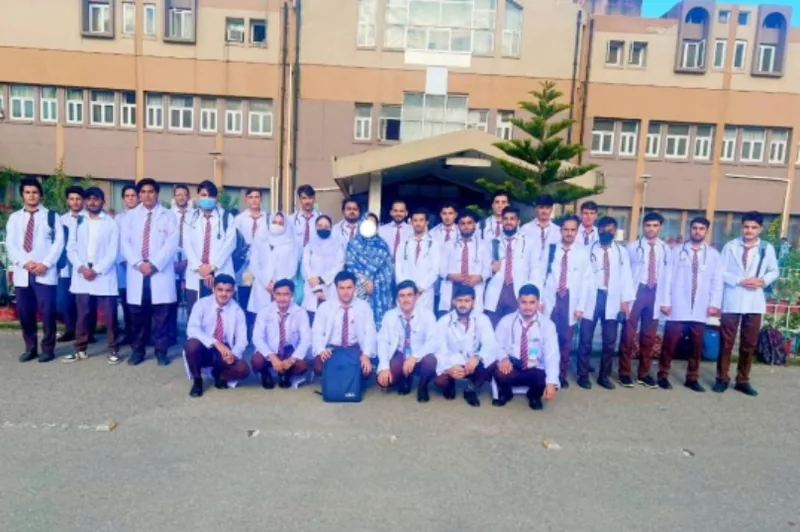
A reference library at the centre of the College
Fully furnished and centrally located, the library holds a substantial collection of nursing, allied health science and related titles, alongside subscriptions to national and international journals and magazines.
High-speed Wi-Fi and internet access throughout the library give students direct access to research articles and e-books while they study.
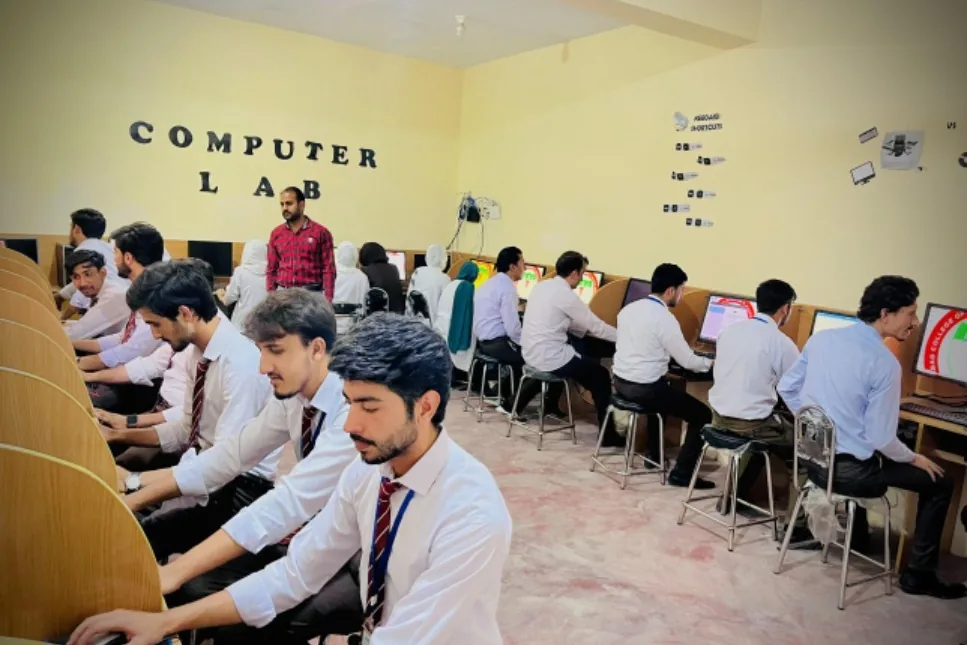
A fibre-connected computer lab
The computer lab sits at the centre of the building, equipped with current-generation computers and fibre Wi-Fi on 50 Mbps and 30 Mbps connections.
Students have full access to the lab and its internet facilities for coursework, assignments, research and any other computer-based activity.
How the College is run
The College is directed by a Chief Executive and a Managing Director, with academic delivery under a Director of Education and student matters under Student Affairs. Program coordinators run the individual disciplines and are the first point of contact for students on a given course.
Three functions sit alongside the teaching:
- An academic committee that maps each program to its council syllabus and signs off internal assessment
- A clinical placement office that arranges ATH rotations, tracks attendance and liaises with ward supervisors
- An examination cell that handles registration and entry for PNC, NEB, KMU and FPAHS examinations
Students raise academic and welfare matters through their program coordinator, and through Student Affairs where the matter is not academic.
Recognition and results
What the College measures itself by is straightforward: how many students pass their council examinations, how many are placed in clinical roles after graduating, and how many go on to further study or overseas registration.
Result notifications for each examination cycle are published on the news page as the councils release them.
Work with us
We hire clinical instructors, subject faculty, laboratory demonstrators and administrative staff. Faculty positions across nursing, pharmacy and the allied health technologies generally ask for the relevant degree plus council registration, and clinical instructor posts ask for ward experience.
Open positions are advertised on this page and on our Facebook page. To register interest when nothing is listed, send a CV to the College email address with the subject line “Faculty application”.
The people behind the College
Dr Adil Khan
Chief Executive
Mr Samiullah
Managing Director
Mr Hassan Khan
Director, Education
Ms Laiba
Student Affairs