
Resources and support
What the College provides alongside teaching: help with fees where we can, academic support when a subject is not going in, and honest guidance on where each qualification leads.
 Fee assistance
Help with fees
Nursing is a route into secure work, and the fee should not be the thing that stops a capable student taking it. The College operates fee assistance for students who need it, assessed case by case rather than through a fixed scheme.
Assistance is considered on financial need and on academic standing, and applications are treated confidentially. Instalment arrangements are also available for families who can meet the fee but not in a single payment.
The current promotional discount of 50% on all six allied health technologies applies automatically to that intake and is separate from any need-based assistance.
Academic support
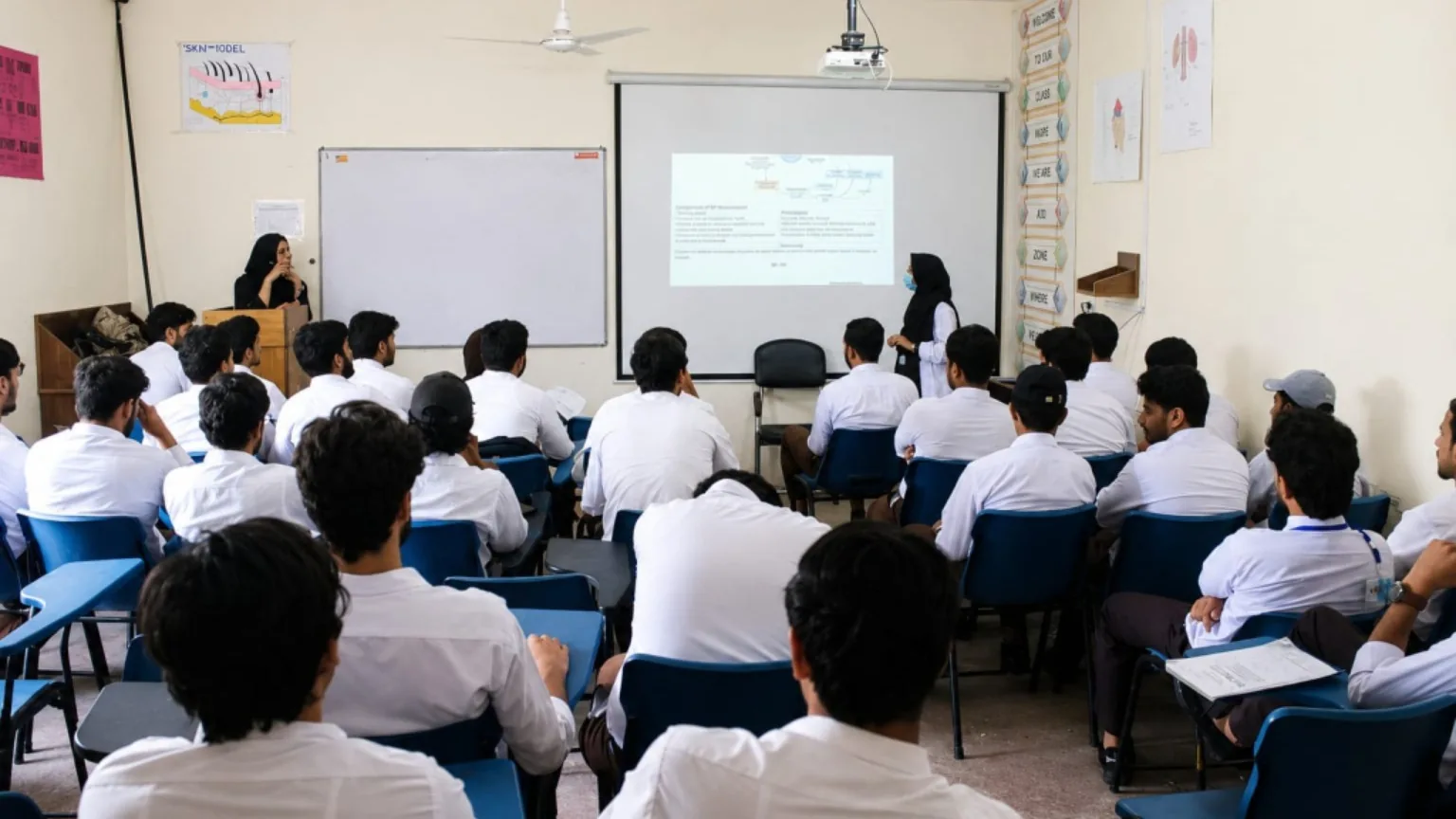
If a subject is not going in, say so early. Program coordinators arrange extra sessions on the subjects students most often struggle with, particularly pharmacology, pathology and anatomy in the degree programs. The library keeps reference copies of the core texts for each program so students who cannot buy every book are not left behind.
Contact your coordinator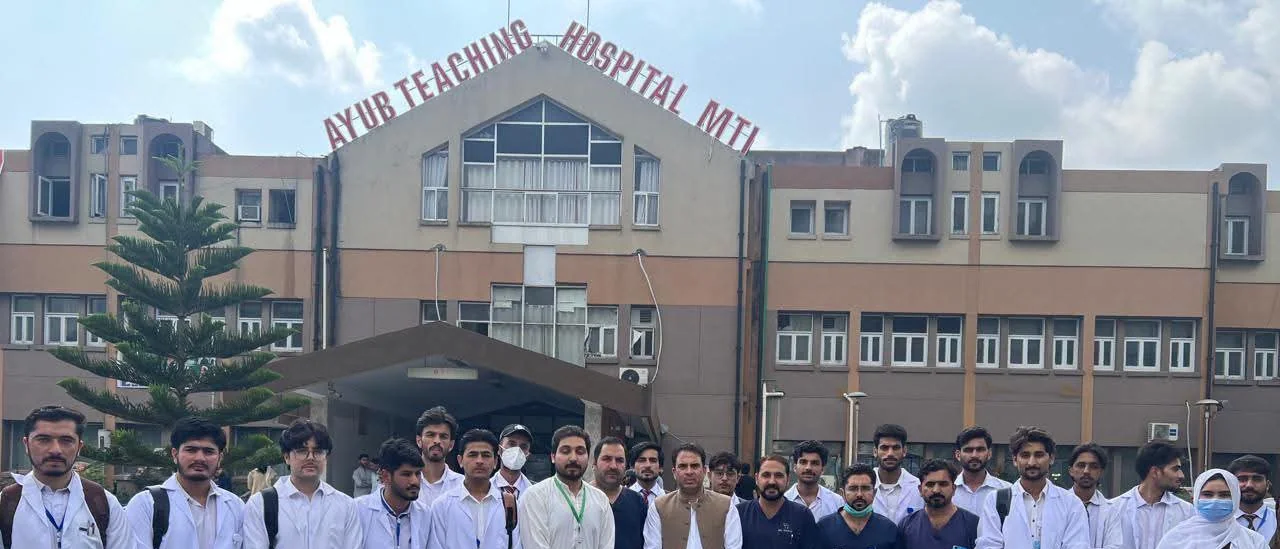
Clinical placement guidance
Before a first rotation, students are briefed on ward conduct, uniform and identification, infection control, patient confidentiality, and what to do when you are asked to perform something you have not been trained on. The answer to the last one is always the same: say so, and ask your supervisor.
Read about placement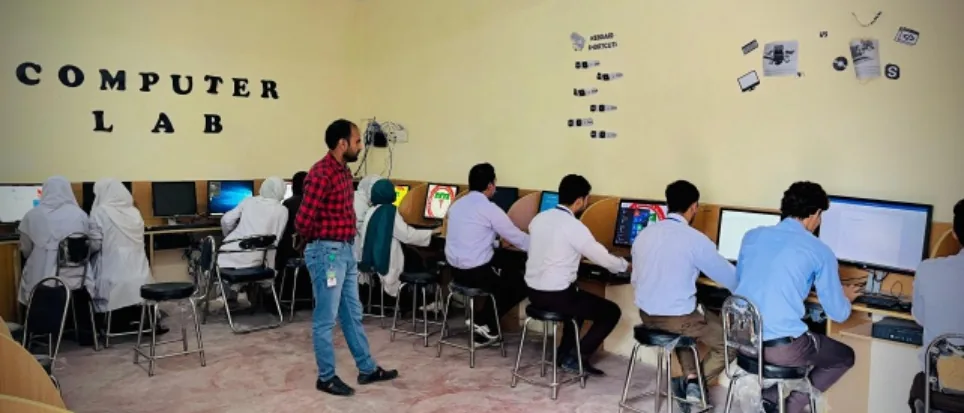
Library and computer lab
The reference library holds nursing and allied health titles alongside national and international journal subscriptions, with Wi-Fi throughout for access to research articles and e-books. The computer lab runs on fibre at 50 Mbps and 30 Mbps, and students have full access for coursework, assignments and research.
See campus & facilities
Where each qualification leads
Every program page lists the roles the qualification opens, the BPS grades where public sector posts apply, and the further study or overseas registration routes that follow. If you are choosing between two programs, read both lists side by side before you decide.
Compare programsRoutes through a nursing career
A first qualification is a starting point, not a ceiling. Some of the routes our graduates take:
From diploma to degree
A General Nursing diploma plus a one-year specialty and valid PNC registration qualifies a practising nurse for the two-year BS Post-RN, which upgrades the qualification to bachelor’s level.
From degree to postgraduate study
A BS Nursing degree opens MSN, MPH and MHPE programs, and beyond those a PhD in Nursing and clinical instructorship.
Into specialist clinical practice
Registered nurses move into ICU, CCU, emergency, paediatrics and oncology nursing, generally through a mix of ward experience and specialty training.
Into supervision and management
Head nurse, nursing supervisor and nursing director posts sit at BPS-17 and BPS-18 in the public sector, and usually require a degree-level qualification.
Overseas
Nurses from Pakistan work across the Middle East, and register in the UK through the NMC, in the USA through NCLEX-RN, and in Canada and Europe through the relevant provincial or national bodies. Each route has its own examination and English language requirement.
Allied health specialisation
Technology graduates specialise within their discipline — laboratory, imaging, theatre, dental or anaesthesia — and move into senior technician and supervisory roles with experience.